Best CCTV Camera for Shops: Complete Buying Guide for Retail Stores & Small Businesses (2026)
Running a shop comes with many responsibilities. Along with serving customers and managing inventory, protecting your business is equally important. Whether you own a grocery store, medical shop, clothing store, jewellery showroom, mobile store, supermarket, café, or hardware shop, installing a CCTV camera system is one of the most effective ways to improve security and monitor daily operations.
A CCTV system does much more than record video. It helps discourage theft, monitor customer activity, keep an eye on employees, and provide valuable evidence if an incident occurs. Many shop owners also use CCTV cameras to check their business remotely while they are away.
Today, there are hundreds of CCTV cameras available in different price ranges and with different features. Some offer colour night vision, others provide AI-based motion detection, while some are designed specifically for indoor or outdoor use. Choosing the right system can feel overwhelming if you don't know what to look for.
This guide explains everything you need to know before buying a CCTV camera for your shop. You'll learn which camera types are best, how many cameras you need, where to install them, and which features are worth paying for.
Why Every Shop Should Have a CCTV Camera
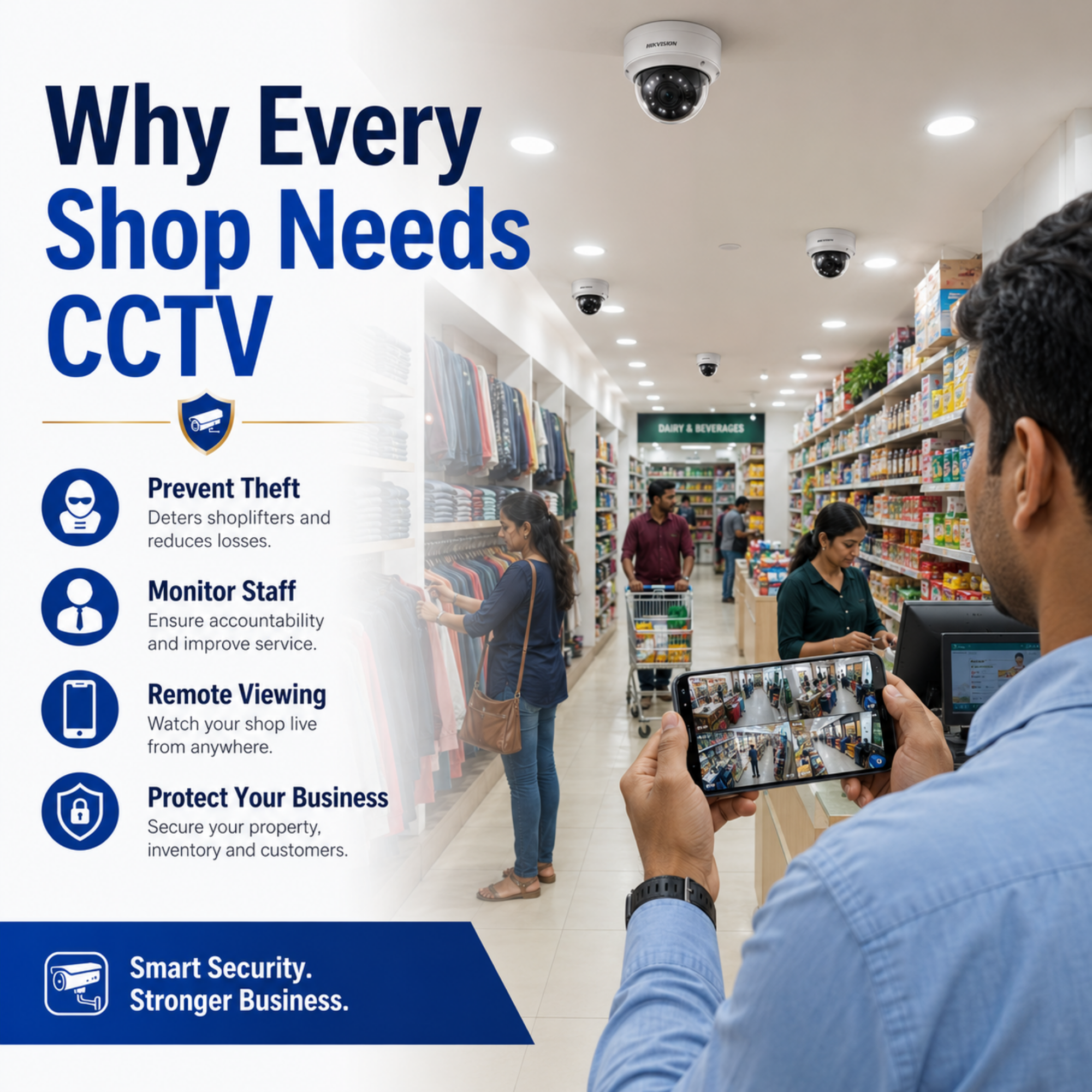
No business is too small to benefit from a CCTV system. Even a single-camera setup can help improve security and provide peace of mind.
Prevent Theft and Shoplifting
Retail stores often lose money due to shoplifting. Small items can easily be taken without staff noticing, especially during busy hours.
Visible CCTV cameras act as a strong deterrent. Customers are less likely to attempt theft when they know their actions are being recorded. If an incident does happen, recorded footage can help identify the person involved.
Monitor Daily Business Operations
A CCTV system isn't just for emergencies. It also helps you understand what happens inside your shop throughout the day.
You can monitor:
- Customer movement
- Staff attendance
- Billing counter activity
- Product handling
- Deliveries
- Opening and closing procedures
If you own multiple branches or spend time away from the shop, remote viewing makes it easy to check your business from your mobile phone.
If you're wondering whether this feature requires an internet connection, read our guide on Do CCTV Cameras Work Without Internet?https://cctvsurveillancecameras.in/blog/do-cctv-cameras-work-without-internet
Improve Employee Safety
Employees often open and close shops early in the morning or late at night. CCTV cameras provide an extra layer of security during these hours.
Knowing that entrances, exits, and work areas are monitored can also create a safer working environment for staff.
Protect Valuable Stock
Every shop has areas where valuable inventory is stored.
Examples include:
- Jewellery displays
- Mobile phones
- Electronics
- Cash drawers
- Medicine storage
- Premium clothing
- Stock rooms
Installing cameras near these areas helps reduce internal and external theft while providing recorded evidence if products go missing.
Choosing the Right CCTV Camera for Your Shop
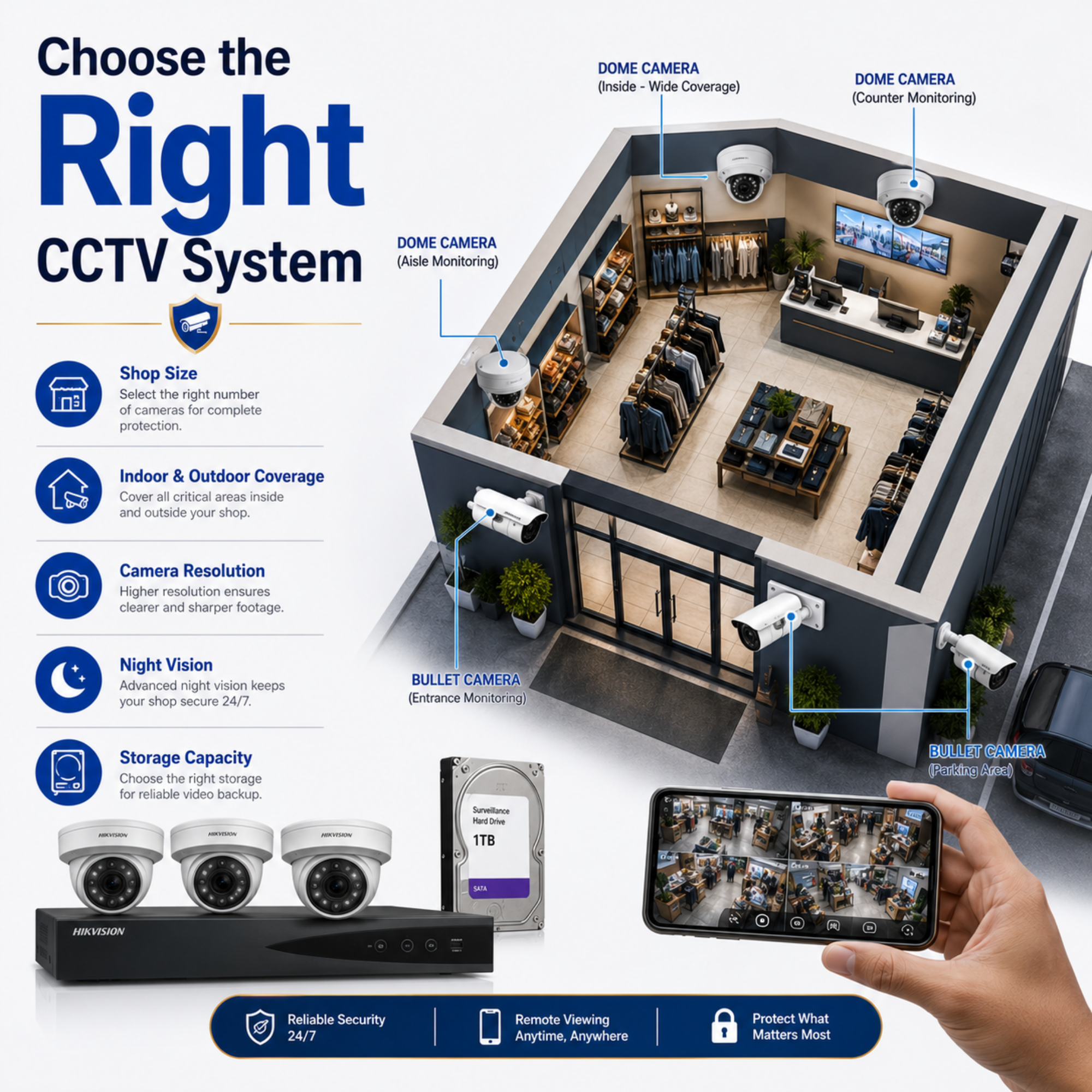
Not every shop requires the same CCTV system. The right setup depends on your shop's size, layout, operating hours, and the type of products you sell.
Before purchasing a CCTV system, consider the following factors.
Shop Size
The number of cameras you need depends largely on the size of your shop.
A small retail store may only need cameras covering:
- Entrance
- Cash counter
- Main shopping area
A larger showroom may also require cameras for:
- Display sections
- Storage rooms
- Office area
- Parking
- Loading entrance
Installing too few cameras can leave blind spots, while installing too many may increase costs unnecessarily.
Our guide on How Many CCTV Cameras Do You Need? explains recommended camera counts for different property sizes and layouts.
https://cctvsurveillancecameras.in/blog/how-many-cctv-cameras-do-you-need
Indoor and Outdoor Coverage
Most shops require both indoor and outdoor surveillance.
Indoor cameras monitor customers, staff, and billing counters.
Outdoor cameras cover:
- Shop entrance
- Parking area
- Signboards
- Delivery entrance
- Loading area
Using the correct camera type for each location improves image quality and increases the lifespan of your equipment.
If you're unsure which design is suitable, our guide on Dome Camera vs Bullet Camera explains where each camera type performs best.
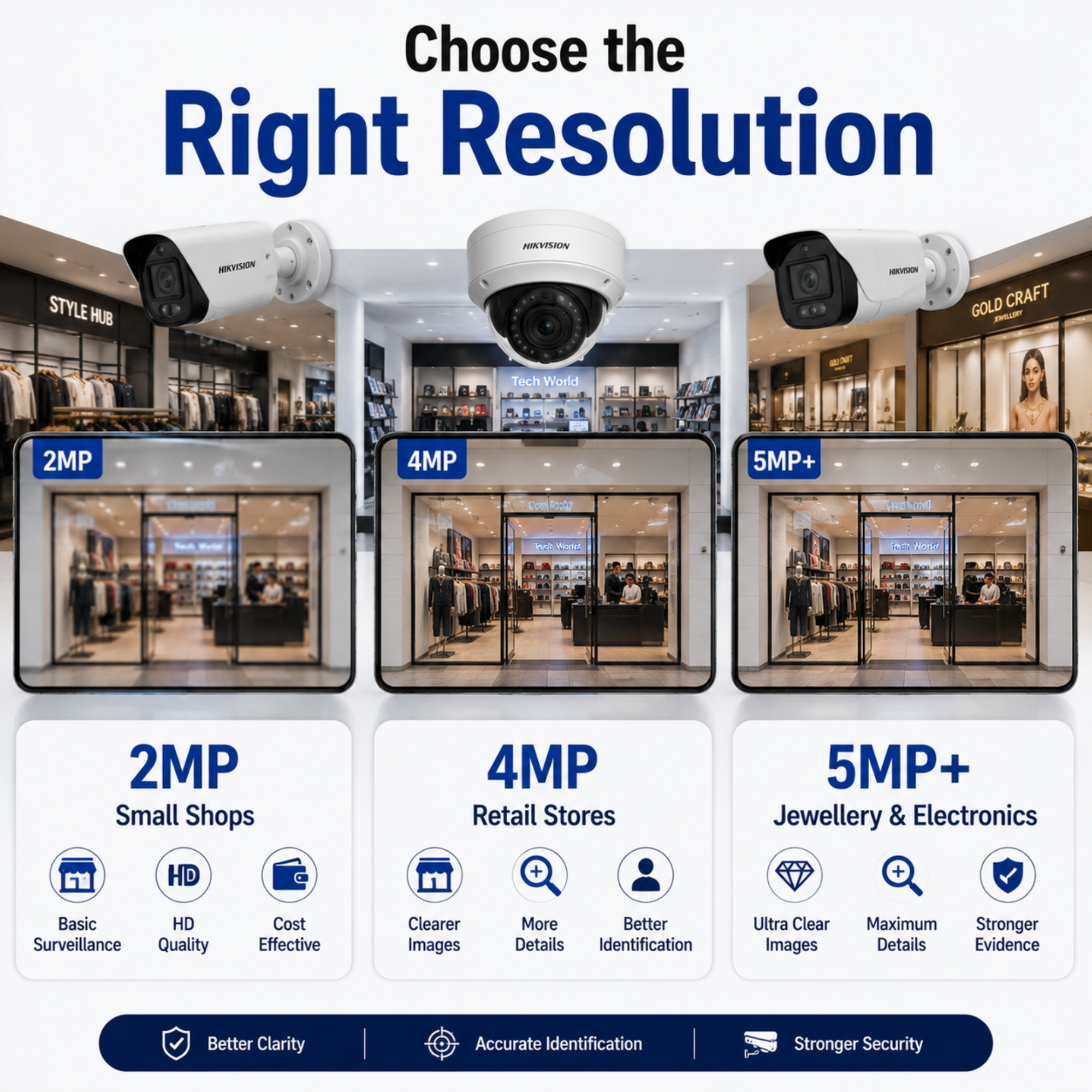
Camera Resolution
Resolution determines how much detail your camera captures.
For most small shops, Full HD (2MP) cameras provide clear images for everyday monitoring.
Medium-sized retail stores often benefit from 4MP cameras because they capture better facial details while keeping storage requirements reasonable.
Large showrooms, jewellery stores, and electronics shops may choose 5MP or higher cameras for improved image quality, especially around display counters and entrances.
Remember that higher resolution also requires more storage space.
Night Vision
Many shops close after sunset, making night vision one of the most important features to consider.
Good night vision allows the camera to continue recording clearly when the shop is closed.
Modern CCTV cameras offer:
- Infrared night vision
- Colour night vision
- Smart dual-light technology
If your shop entrance is well-lit, colour night vision can capture useful details such as clothing colours and vehicle colours.
If you're comparing these technologies, read our detailed guide on Color Night Vision vs Infrared Night Vision CCTV Cameras.
Storage Requirements
Recording quality and storage go hand in hand.
Higher-resolution cameras and continuous recording require larger hard drives.
Many shop owners choose a storage capacity that keeps footage for at least two to four weeks before older recordings are overwritten.
If you're using multiple high-resolution cameras, your installer can recommend the appropriate hard drive size based on your recording schedule.
Best Places to Install CCTV Cameras in a Shop
Proper camera placement is just as important as choosing the right camera.
A poorly positioned camera may miss important activity even if it records in high resolution.
Shop Entrance
The entrance is the highest-priority location.
Every customer, supplier, delivery partner, and visitor passes through this area.
Install the camera high enough to avoid tampering while still capturing clear facial images.
Avoid pointing the camera directly towards bright sunlight to reduce glare.
Billing Counter
The billing counter handles cash transactions, digital payments, refunds, and customer interactions.
Installing a camera above the counter helps record transactions and resolve payment disputes if they arise.
Product Display Area
Display shelves should also be covered, especially if your shop sells high-value products.
Wide-angle cameras work well for monitoring larger display areas without creating blind spots.
Stock Room
The stock room often contains valuable inventory that customers cannot access.
Installing a CCTV camera here helps monitor stock movement and provides an additional layer of accountability.
Parking Area
If customers park outside your shop, an outdoor weather-resistant camera can help monitor vehicles and entrances.
For the best coverage, install the camera where it captures both approaching vehicles and people entering the premises.