
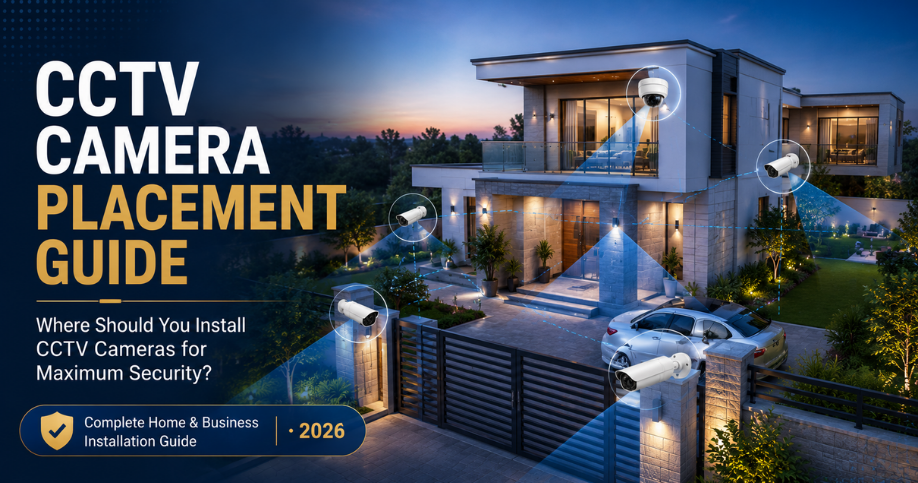
CCTV Camera Placement Guide
Installing CCTV cameras is one of the best ways to improve the security of your home or business. However, buying good-quality cameras is only half the job. Where you install those cameras has an even bigger impact on how well your security system performs.
A camera placed in the wrong location may miss important activity, create blind spots, or fail to capture clear images when you need them the most. On the other hand, a well-planned CCTV system can provide complete coverage of your property, helping you monitor entrances, exits, vehicles, visitors, and valuable areas with confidence.
Many homeowners assume they need cameras everywhere. In reality, a few cameras installed in the right locations often provide better protection than many cameras placed without proper planning.
Whether you live in an apartment, an independent house, a villa, or own a shop or office, understanding the best camera placement can help you get the most from your investment.
In this guide, we'll explain where CCTV cameras should be installed, common mistakes to avoid, and practical tips to achieve maximum security without unnecessary expense.
Why CCTV Camera Placement Matters
A CCTV camera can only record what it can see. Even the highest-resolution camera cannot capture useful footage if it is installed in the wrong position.
Good camera placement helps you:
- Reduce blind spots around your property.
- Capture clear images of people entering and leaving.
- Monitor valuable assets and vehicles.
- Improve night-time visibility.
- Prevent tampering by installing cameras at the correct height.
- Create a visible security presence that discourages unwanted activity.
Poor placement, on the other hand, can leave important areas unprotected and reduce the effectiveness of your entire CCTV system.
Good Cameras Can Still Miss Important Areas
Many people spend more money on higher-resolution cameras while overlooking the importance of placement.
For example, installing a camera too high may prevent you from identifying faces clearly. Installing it too low may make it easier for someone to tamper with the camera.
Similarly, placing a camera behind a decorative light, tree branch, or pillar can block part of the view without you realising it until an incident occurs.
Planning the installation carefully before mounting the cameras saves time, improves coverage, and helps avoid unnecessary adjustments later.
Common Camera Placement Mistakes
Some of the most common mistakes include:
- Installing cameras directly into bright sunlight.
- Pointing cameras towards reflective glass surfaces.
- Mounting cameras too high or too low.
- Ignoring side entrances and rear access points.
- Forgetting to monitor parking areas.
- Leaving blind spots between cameras.
- Choosing the wrong type of camera for the location.

If you're still deciding how many cameras your property needs, it's worth reading our detailed guide on How Many CCTV Cameras Do You Need?
https://cctvsurveillancecameras.in/blog/how-many-cctv-cameras-do-you-need
That guide explains recommended camera counts for apartments, independent houses, villas, and commercial properties.
Things to Consider Before Installing CCTV Cameras
Every property is different, but there are a few factors that should always be considered before deciding where to install your cameras.

Entry and Exit Points
Every entrance into your property should be monitored.
This includes:
- Main entrance
- Back entrance
- Side gates
- Garage entrance
- Parking access
- Terrace access (if applicable)
Most security incidents begin at an entry point, making these areas the highest priority.
When positioning cameras, try to capture clear facial images rather than only wide views of the surrounding area.
Lighting Conditions
Lighting has a major impact on image quality.
Avoid positioning cameras directly towards:
- Bright sunlight
- Vehicle headlights
- Outdoor floodlights
- Reflective windows
- Highly reflective walls
Instead, install cameras where lighting remains consistent throughout the day.
If certain areas receive very little light at night, choose cameras with colour night vision or advanced low-light sensors.
Camera Height
Camera height affects both image quality and security.
A camera installed too low can easily be damaged or redirected.
A camera installed too high may only capture the tops of people's heads rather than their faces.
For most homes and businesses, cameras should be installed high enough to prevent tampering while still providing a clear view of faces and activities.
Professional installers typically balance security and image quality by adjusting both the mounting height and the viewing angle.
Viewing Angle
Every CCTV camera has a specific field of view.
Wide-angle cameras cover more area but capture less detail at a distance.
Narrow-angle cameras cover a smaller area but provide better detail over longer distances.
For example:
- A living room benefits from a wide-angle camera.
- A driveway often requires a camera focused on vehicles entering and leaving.
The goal is to avoid overlapping coverage while ensuring there are no blind spots between cameras.
Weather Protection
Outdoor cameras should always be suitable for local weather conditions.
In Bengaluru, cameras are exposed to:
- Heavy monsoon rain
- Summer heat
- Dust
- Humidity
Choosing weather-resistant cameras helps ensure reliable performance throughout the year.
If you're still deciding between dome and bullet cameras for outdoor use, our detailed comparison explains which camera type performs best in different environments. https://cctvsurveillancecameras.in/blog/dome-camera-vs-bullet-camera-which-cctv-camera-is-better-for-your-home-or-business
Best CCTV Camera Placement for Homes

Every home has different security requirements, but some locations should almost always be covered.
Main Entrance
The main entrance is the most important place to install a CCTV camera.
Every visitor, delivery executive, maintenance worker, and guest enters through this point.
Position the camera so it captures clear facial images rather than only showing the doorway.
Avoid pointing the camera directly into bright sunlight, as this may reduce image quality during certain times of the day.
Back Door
Many homeowners focus only on the front entrance while overlooking the back door.
Rear entrances often receive less attention, making them attractive access points.
Installing a weather-resistant camera above the back door provides an additional layer of security without requiring extra monitoring.
Living Room
Indoor cameras are useful for monitoring movement inside the house, especially when you're travelling.
A dome camera is often the preferred choice because it blends naturally with indoor interiors while providing wide coverage.
It can help monitor:
- Children
- Elderly family members
- Pets
- Visitors
- Domestic staff
If you're choosing between camera styles, our guide on Dome Camera vs Bullet Camera explains which design works best indoors and outdoors.
Balcony
Apartments and high-rise homes often benefit from installing a camera overlooking the balcony.
Although balconies may seem secure, they can also provide access to maintenance platforms or neighbouring structures in some buildings.
A compact outdoor-rated camera can help monitor activity without affecting the appearance of the property.
Parking Area
If your vehicle is parked inside your property, installing a camera overlooking the parking space is highly recommended.
Position the camera so it captures:
- Vehicle entry
- Vehicle exit
- Number plates
- People approaching the vehicle
Good lighting in this area significantly improves the usefulness of recorded footage.